← HOME
THERMOROID
Budnitz Lab
PHYSIOLOGICALLY OPTIMIZED
HUMAN PERFORMANCE
NOVEMBER 2024 PROTOTYPE COUNT: 237
Thermoroid Render
Scale Rendering (August 2023)
The Thermoroid is a portable muscle cooling system designed to increase strength and endurance by lowering core body temperature.

When held between the hands, the Thermoroid cools the blood flowing beneath the surface of the palms. The cooled blood then circulates throughout the body, thereby lowering its internal temperature. Research conducted by Stanford University demonstrates that using this technology during exercise significantly increases strength [1] and endurance [2]. These increases have been found to be so profound that the technique has been likened to anabolic steroids [3].

The Thermoroid is the first to deliver these benefits in a portable, affordable, and reusable form.
SPECIFICATIONS
 
STORY
While studying political science at Stanford, I enrolled in a physiology course taught by the father of palmar cooling, Professor Craig Heller. In the final lecture, Professor Heller presented his research he conducted to first demonstrate how proper thermoregulation — achieved by precisely cooling the palms of the hands — could improve strength, endurance, and muscle recovery, and concluded by showcasing the CoolMitt, an electrical palmar cooling system he helped design and recently commercialize. Wanting to enjoy these benefits, I asked Professor Heller if I could buy one; however, he informed me that CoolMitt cost thousands and was backordered to a waitlist. Having neither the money nor the patience needed for a CoolMitt, I designed an affordable palmar cooling system for myself and my friends — The Thermoroid.

Necessity is the mother of invention.

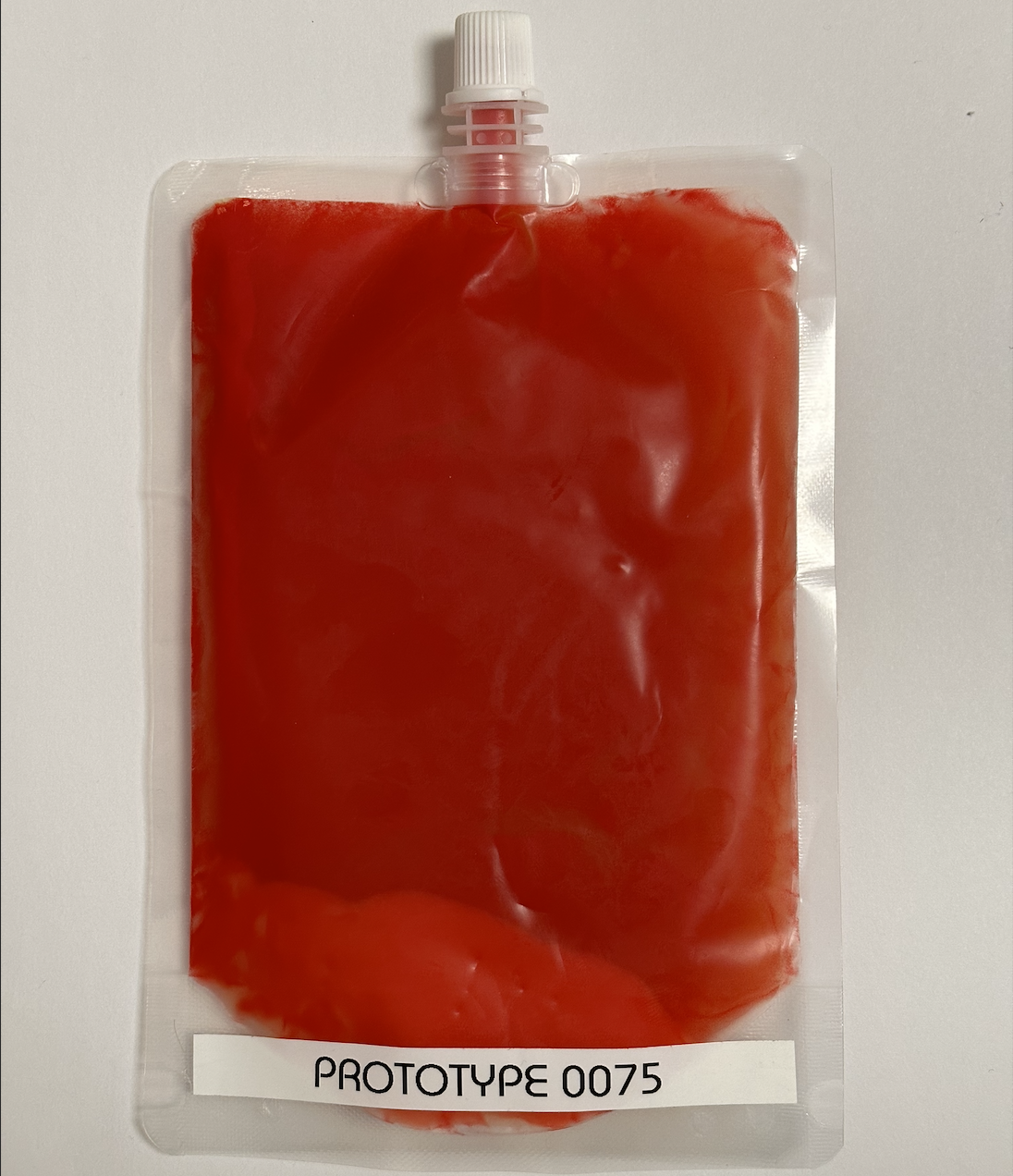
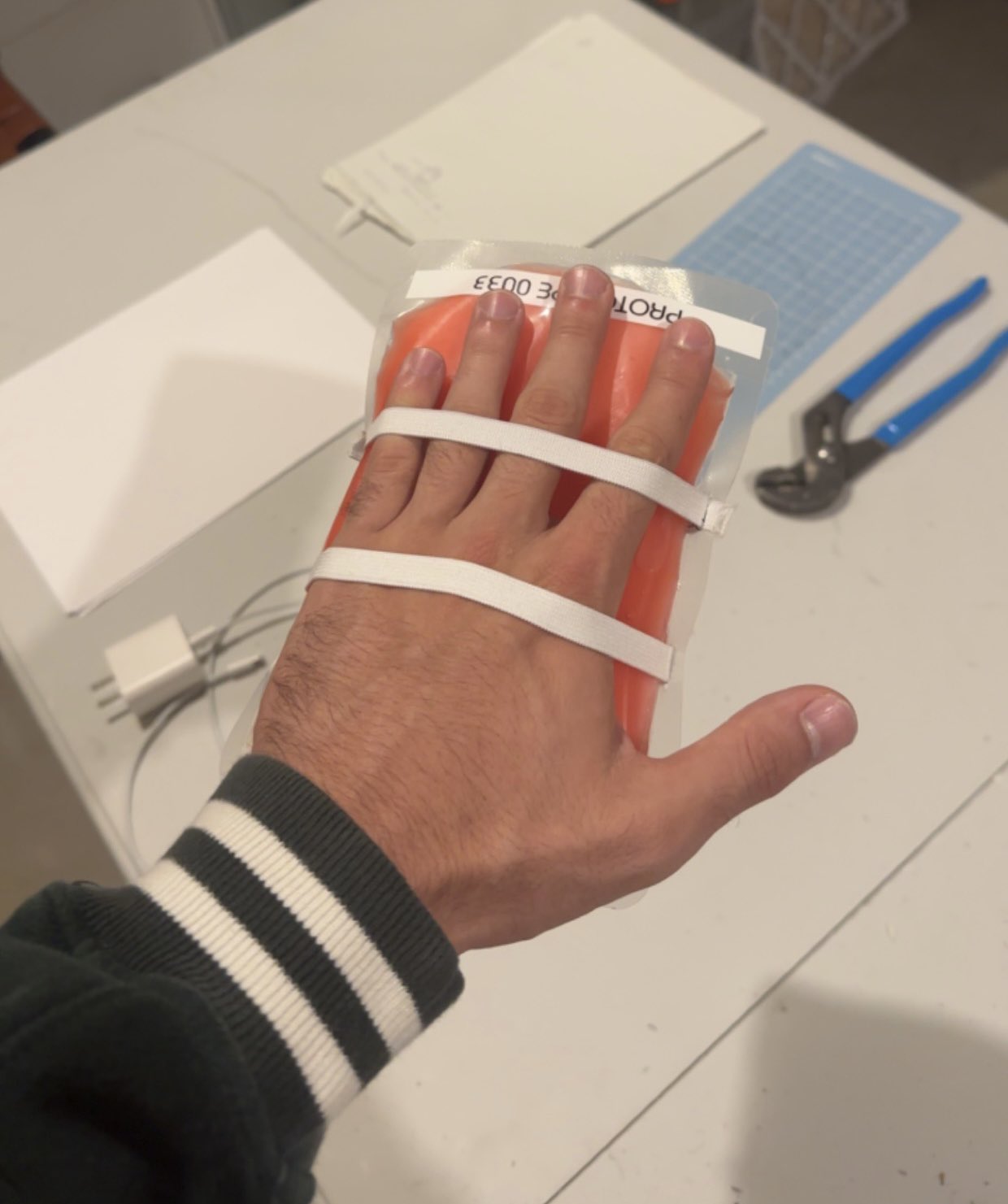
To economize palmar cooling technology, I removed the need for electrical cooling techniques and opted for a chemical solution instead. After a few weeks of researching and experimenting with various heatsinks in my dorm room, I developed a material that could absorb significant heat while remaining within the range of temperatures ideal for palmar cooling as well as change color when to indicate its temperature. I packaged this material into a handheld device, analyzed its performance, iterated its design (current prototype count: 237) and collected pilot human trials data (see: below). In Summer 2023, I filed a provisional patent on the technology and a non-provisional in October 2023. This intellectual property was acquired by biotech start-up, Arteria Technology, where I now serve as Chief Innovation Officer, working to bring the Thermoroid to market.

PROTOTYPES
Prototype (red) Prototype
IMAGES FROM DATE 1, DATE 2, DATE 3
PILOT STUDIES
The rate at which the body's muscles produce the ATP required for muscle contraction is temperature-dependent. As internal (or core) body temperature rises above 37°C, the activity of the pyruvate kinase enzyme (an enzyme directly involved in ATP production) decreases, ultimately lowering the rate of ATP production and thereby diminishing performance during exercise or other physical activities. Measuring core body temperature directly requires placing a temperature probe into the subject's esophagus; however, heart rate has been shown to be directly proportional to core body temperature in exercising subjects, and thus measuring a subject's heart rate can provide an indirect means of determining core body temperature. The primary objective was to determine if use of a single chamber embodiment of an oleic acid cooling device induces a significant decrease in core body temperature by measuring subjects' heart rates during continuous aerobic exercise. The secondary objective was to explore if the use of a single chamber embodiment of an oleic acid cooling device might increase exercise capacity.
METHODOLOGY
Two subjects each performed an aerobic capacity pretest, aerobic capacity trial with a test device, and an aerobic capacity trial with a control device. The subjects were given one day of rest between each trial and instructed not to engage in other cardiovascular activities between tests. Subjects performed all three of their tests at the same time of day. Subjects were further instructed to refrain from any unnecessary physical activity between tests and agreed to not consume any caffeine, nicotine, or other stimulants within one day of any of their tests. Subject 1 performed the first aerobic capacity trial with a control device and the second with the Thermoroid. Subject 2 performed the first aerobic capacity trial with the Thermoroid and the second with the control device.

During the aerobic capacity pretest, subjects walked on the treadmill at 3.5 miles per hour (mph) and at a zero-degree incline while holding the control device and wearing a chest strap heart rate monitor. Subjects were instructed not to talk or listen to music while testing as doing so may cause fluctuations in heart rate. The incline was increased by two degrees every three minutes until the subject's heart rate reached 90% of their age-adjusted maximum heart rate (age-adjusted maximum heart rate = 220 beats per minute – age in years). The incline at which subjects reached their maximum heart rate was recorded.

After one day of rest, subjects performed their first aerobic trial. While wearing a chest strap heart rate monitor, subjects began walking at 3.5 mph and at an incline equivalent to 80-85% of the incline at which they achieved 90% of their maximum age-adjusted heart rate during the pretest. Once subjects warmed up to their 70% heart rate threshold, they were given either a test or a control device to hold. (Note: beginning the test at the 70% threshold is necessary to standardize the subject's starting heart rate.) The test devices were initially chilled to an 8°C surface temperature and replaced when they had exceeded a 14°C surface temperature. The subjects were instructed to hold the Thermoroid/control device for 90 seconds and then place it down on the treadmill console for 30 seconds of rest. During the 30-second rest, the subjects were instructed to walk normally with their hands by their side. (Note: excessive hand or arm movement was observed to cause fluctuations in heart rate.) Subjects were instructed to continue walking while cyclically holding the device for 90 seconds and resting for 30 seconds. The trial was ended once their heart rate reached 90% of their age-adjusted maximum.

After another day of rest, subjects performed their second aerobic capacity trial while holding the test/control device which was not used during the first trial.
MEASURES & ANALYSIS
The subjects' heart rates were recorded each second during the pretest, cooling trial, and control trial. To determine if subjects' heart rates were significantly impacted during the aerobic exercise trial using the Thermoroid compared with the aerobic exercise trial using the control device, the rate of the increase in each subject's heart rate during the aerobic exercise trial using the Thermoroid was compared the rate of increase in their heart rate during the trial using the control device. A linear regression was used to calculate the slope of heart rate increase during the aerobic exercise trials using the heart rate recorded at 10 second intervals beginning when the subject's heart rate reached 70% of their pre-test maximum heart rate and ending when their heart rate reached 85% of their pre-test maximum heart rate. The fitted slopes for each subject's trial with the test device were compared to their trial with the control device using a two-sided t-test with alpha set at 0.05 for determining statistical significance.

To explore the secondary objective of determining if using the Thermoroid might increase exercise capacity, the duration of time from when the subject's heart rate reached 70% of their pre-test maximum heart rate and ending when their heart rate reached 85% of their pre-test maximum heart rate was measured. The difference in duration of time was calculated for each subject's aerobic exercise trial with the Thermoroid to their aerobic exercise trial with the control device. Statistical testing was not conducted for this exploratory objective.
FINDINGS
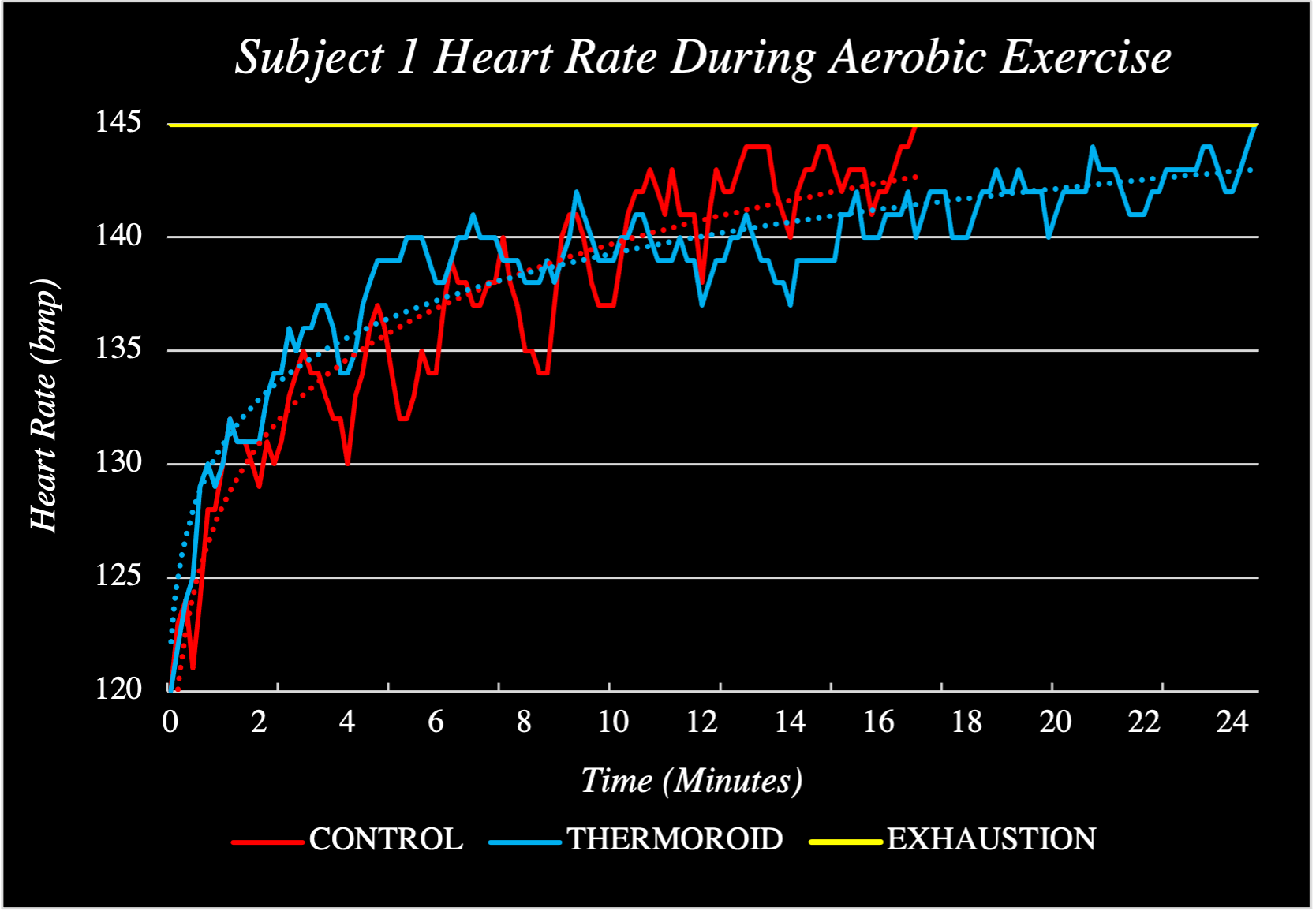
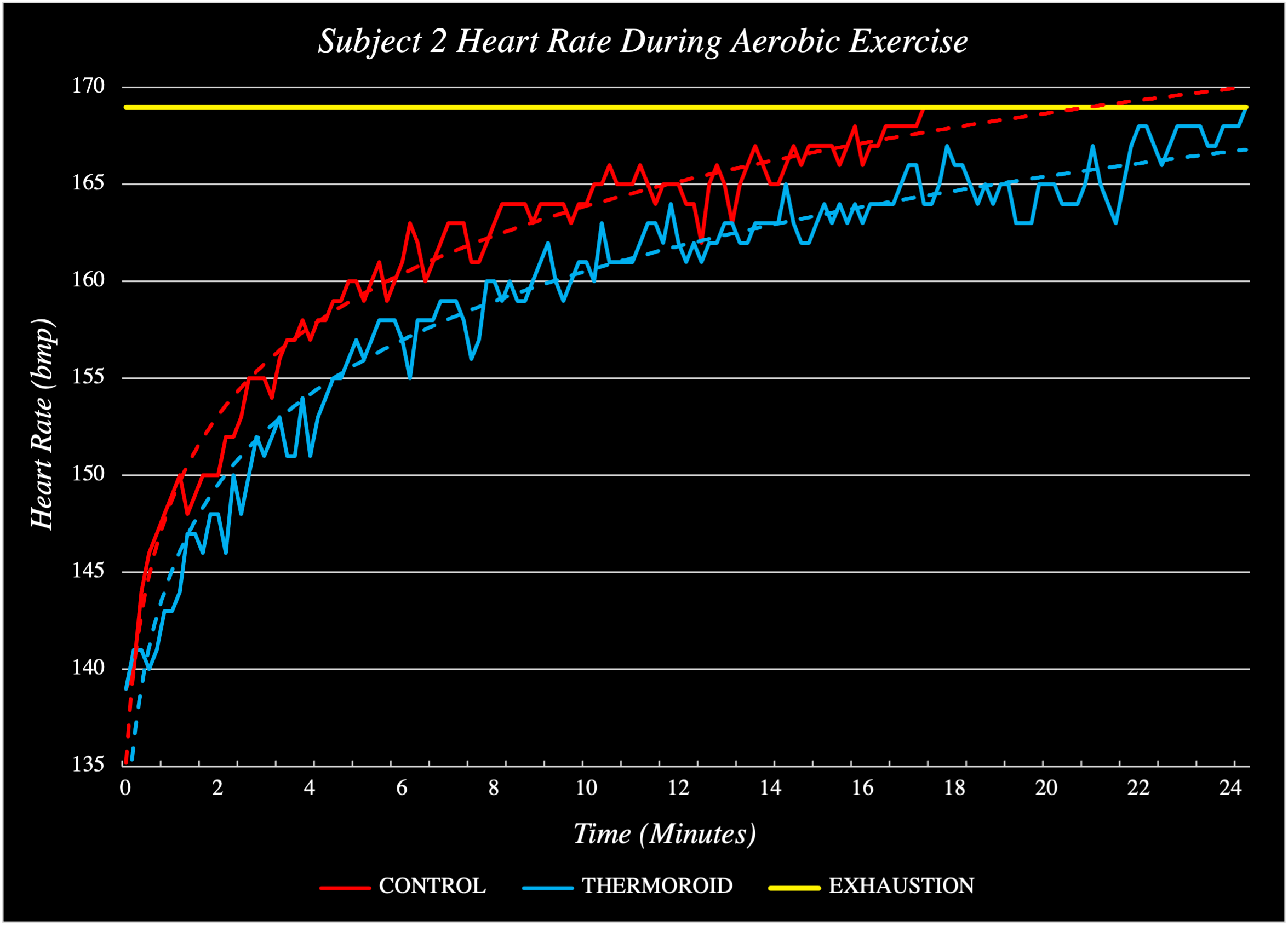
Both subjects tested had a significantly slower rate of heart rate increase during the aerobic trial using the Thermoroid. The rate of heart rate increase for subject 1 was +0.46 beats per minute (bpm) per minute during the aerobic trial using the Thermoroid and was +1.04 bpm per minute during the aerobic trial with the control device (p = 2.9 × 10⁻², t-stat = 11). The rate of heart rate increase for subject 2 was +0.87 bpm per minute during the aerobic trial using the Thermoroid and was +1.16 bpm per minute during the aerobic trial with the control device (p = 2.8 × 10⁻⁵, t-stat = 4.3).

Both subjects tested had an increased duration of time before reaching 85% of their maximum heart rate during the aerobic trial using the Thermoroid. Subject 1 reached 85% of their maximum heart rate in 25:00 (minutes:seconds) during the aerobic trial using the Thermoroid compared with 17:20 during the aerobic trial with the control device. Cooling increased the time Subject 1 could exercise by 44% (+7 minutes 40 seconds) (see: Subject 1 Heart Rate During Aerobic Exercise). Subject 2 reached 85% of their maximum heart rate in 24:50 during the aerobic trial using the test device compared with 17:50 during the aerobic trial with the control device. Cooling increased the time Subject 2 could exercise by 39% (+7 minutes).
Subject 1 Heart Rate During Aerobic Exercise Subject 2 Heart Rate During Aerobic Exercise
CONCLUSIONS
Previous research has shown that palmar cooling decreases core body temperature and increases exercise capacity. However, previous palmar cooling applications have significant portability, cost, and practicality limitations for real-world circumstances. These pilot datasets show a statistically significant slowing of subjects' heart rate increase during aerobic exercise, indicating that this invention can achieve core body temperature lowering. While more subjects would be required to demonstrate the statistical significance of improvements in the duration of aerobic capacity, the pilot data are also encouraging for this outcome.